Hey there!
My name is Ruben. I’m a young, ambitious man on a mission to study the mechanics of the universe, push my physical and mental limits, and have fun along the way. Here you’ll find some of my projects, insights, and the chaos that comes with chasing knowledge.
The main purpose of this website is to share documents concerning my academic activities. I’ve also decided to write about some of my non-academic interests. The page labeled “Body” is dedicated to fitness. On “Mind” I talk about other insights and interests including philosophy, books, media use, my time in the military and more – basically (almost) everything else that’s on my mind.
Thank you, CSB, for pointing out the typos in my work and your continued support. I truly appreciate you.
A true work in progress.
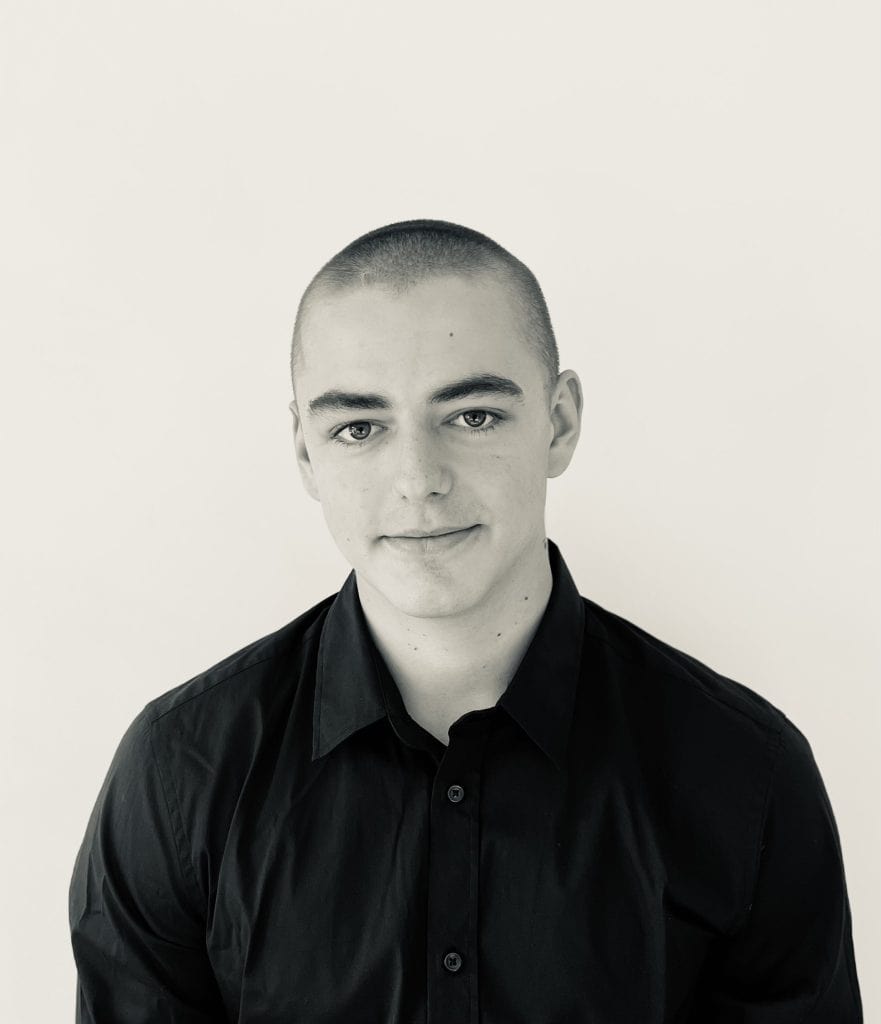
Who am I?
I’m an undergraduate student of physics at ETH Zurich. I love what I do. It feels like solving puzzles all day long – a childhood dream come true.
Apart from doing physics I love being physically active. Some of my many interests include handball, volleyball, muay thai and surfing. Most recently I’ve switched my weightlifting routine to a more calisthenics based one. Maybe in the future I’ll share my progress on here.
I like to read. I’ve always told myself I’m too young to read fiction. Let’s hope that in the future I’ll be mature enough to appreciate good literature. These days I’m really into philosophy – right now I’m reading Pierre Hadot’s book What Is ancient philosophy? You’re welcome to read more on “Mind“.
If you want to discuss anything else on my website, I invite you to write me an email – maybe we can exchange some interesting thoughts. If there’s an issue of some sort or you found errors in my work, don’t hesitate to contact me. I’m always trying to keep an open mind.
Best of luck,
Ruben
Academic Interests
Growing up building Lego on my childhood bedroom floor and listening to detective stories, I was naturally introduced to the art and joy of problem solving. As I got older, detective stories and Lego morphed into math and science.
Thanks to the privilege of having great teachers and mentors who nurtured those interests, I decided to pursue an academic path in science. I was torn between mechanical engineering and physics. Realizing that I enjoy the abstractness of problems (to a point) and that quantum physics fascinates me, I signed up for the physics bachelor’s program at ETH Zurich—a world-class academic institution practically on my doorstep. Another privilege I’m exceptionally grateful for and intend to make full use of.
The more I study and deepen my knowledge, the more I realize how many interesting fields are out there—and how little I know about them. Or, as Socrates famously put it: “The only true wisdom is in knowing you know nothing.”
I’d describe myself as a very curious person. You could talk to me about almost anything, and I’d find something that sparks my interest. Since time is limited, I’ll only be able to go deep in a few of those areas.
Digital circuits, optimization problems, simulations of chaotic systems, and quantum computing are currently at the top of the list.
Curriculum Vitae
If you’re interested in my academic CV, you’re welcome to download it here. Last updated in June 2026.
Current Project – STM
A scanning tunneling microscope, or STM for short, is a device that exploits quantum tunneling current to resolve the structure of metals with atomic-level accuracy.
For optical devices, this level of resolution is nearly impossible. The idea of using quantum tunneling to achieve such accuracy was first realized by Binnig and Rohrer from IBM in 1981. In 1986, they received the Nobel Prize in Physics for this invention. If you’re interested, here is a good page to learn more.
I think it’s marvelous that we can observe atomic structures in this way, so it’s very exciting for me to be working on building an STM myself.
A good friend of mine, LT, who is a very talented electrical engineering student at ETH (probably one of, if not the smartest guy I know), approached me with the idea of recreating the project together—a homegrown STM.
Our objective is to reach atomic-level spatial resolution. This turns out to be very hard to realize, since one has to work with extreme orders of magnitude.
Here, I want to point out some of the challenges one faces when working at such orders of magnitude:
Tiny vibrations—for example from a car driving by or someone in the next room moving a chair—can destroy an entire measurement, so the STM has to be isolated from its surroundings. The same holds for changes in air pressure (sound) and thermal fluctuations.
The tunneling current is on the order of picoamperes. This means the noise level in the electronics has to be extremely low. Parasitic effects suddenly become highly relevant, and the design of schematics and PCBs is therefore non-trivial.
Positioning the tip of the microscope, which allows us to measure the tunneling current, has to be accurate on the nanometer scale. This can be achieved using piezoelectric elements, which must also be driven with extremely low electrical noise. Another challenge is obtaining a tip that is sharp enough to consist of only a few atoms.